Roosterfish are an eastern Pacific fish with a comb of seven dorsal spines, a fight far beyond their weight, and almost no value on a dinner plate. That last part is why they are still here in numbers. Here is where they hold off Quepos, when they fish best, and what to expect on the rod.
Ask an angler why they flew to Costa Rica and half the time the answer is a fish they will never eat. Roosterfish are not on any restaurant menu here. They are not worth cooking. They are the reason a good share of our inshore charters get booked anyway.
What a roosterfish actually is
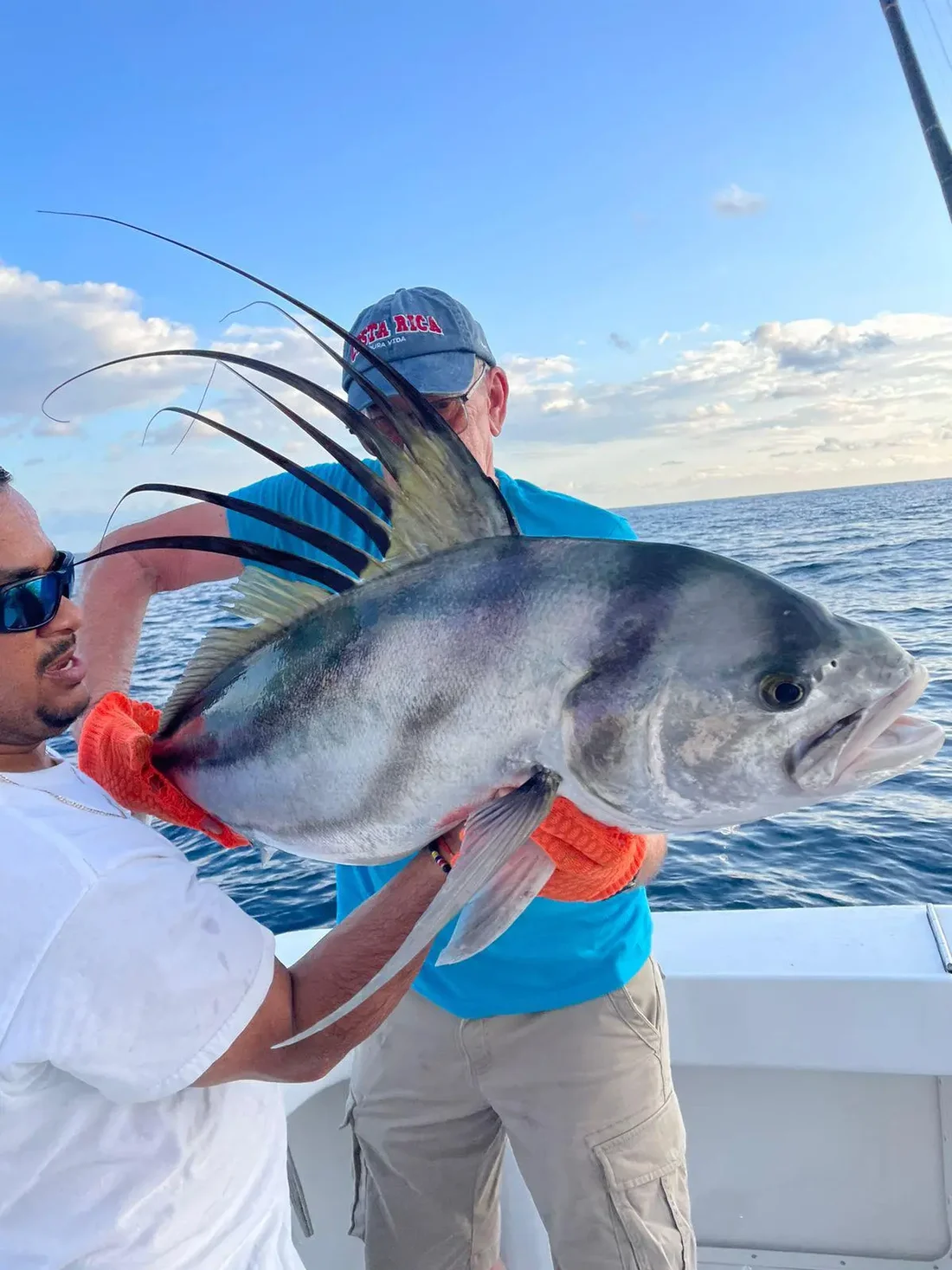
Nematistius pectoralis is the only species in its family. Nothing else is closely related to it, which is unusual and part of why it looks the way it does: a comb of seven long dorsal spines that lie flat when the fish is calm and stand straight up when it is hunting or hooked. That comb is where the name comes from, and seeing it cut the surface behind a bait is the moment people remember from the trip.
They live only in the eastern Pacific, roughly Baja California down to Peru. There is no Atlantic roosterfish, no Caribbean roosterfish, no Mediterranean equivalent. If you want one, you come to this side of the Americas, and Costa Rica is the most accessible place on that list.
Where they hold off Quepos
Roosterfish are structure fish. They sit where rock, reef and moving water meet, which off Quepos means the stretch between Punta Quepos and Punta Catedral, the rocky points and drop-offs along that shoreline, and the river mouths where fresh water pushes bait out into the salt.
None of that is far. The inshore grounds are minutes from Marina Pez Vela rather than the hour-plus run offshore trips make, which is the practical reason the inshore trip is four hours instead of eight. You are fishing almost as soon as you clear the breakwater.
When to come
Here is the part that makes roosterfish unusual among the fish people travel for: there is no season to plan around. They hold on that rock all year.
Billfish have a window, December through April. Dorado and tuna have theirs, May through September. Roosterfish just sit there being roosterfish. If your dates are already fixed by school holidays or flights or somebody's wedding, and you want a real shot at a fish worth photographing, this is the one that does not care what the calendar says. Our month by month guide covers everything else that moves through the year.
How we fish them
Live bait, most days. Blue runners and small bonito, slow-trolled or dropped back along the structure, is the method that puts the most fish in the air. Roosterfish are ambush hunters and a struggling live bait near rock is exactly what they are built to intercept.
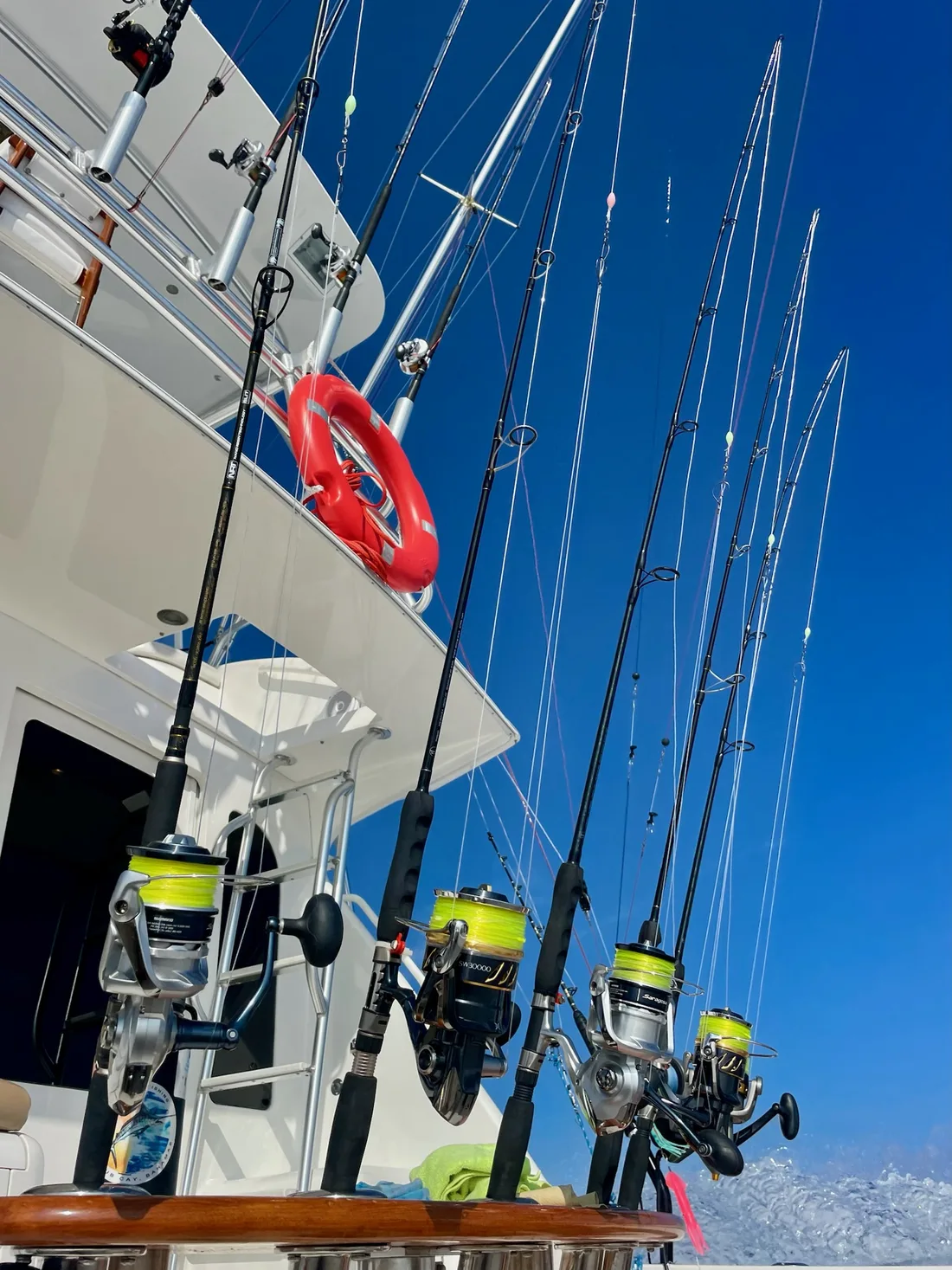
Poppers and stickbaits work too, and on the right morning a topwater bite from a rooster is the best thing that happens on this coast. It is less consistent than bait. Anglers who want it usually say so when they book, and the crew plans the morning around it.
Either way the fight is the same story: a hard first run, a lot of head shaking, and a fish that pulls like something twice its size. Roosterfish do not jump. They just refuse to come up.
What to realistically expect
Most roosterfish landed off Quepos run somewhere in the 20 to 40 pound range. A fish over 50 is a genuinely good day and gets mentioned at the dock. The species grows well past 100 pounds, and the IGFA all-tackle record sits far above anything a normal trip produces, so those fish do exist, but anybody booking a four hour trip expecting one is setting themselves up to be disappointed by an excellent morning.
We would rather tell you that now than have you find out at 11am.
Why they all go back
Roosterfish are poor eating. Coarse, dry, not worth the ice. That has turned out to be the best thing that ever happened to the species, because it means there has never been a commercial reason to hunt them hard, and sport anglers here release them as a matter of course.
The crew handles them in the water where possible, keeps them wet, holds them by the tail and jaw rather than lifting by the gills, and takes the photograph quickly. Then the fish swims off to annoy somebody else next season. The number of roosterfish on this coast is a direct result of that being the normal thing to do rather than a rule anyone enforces.
Booking a roosterfish morning
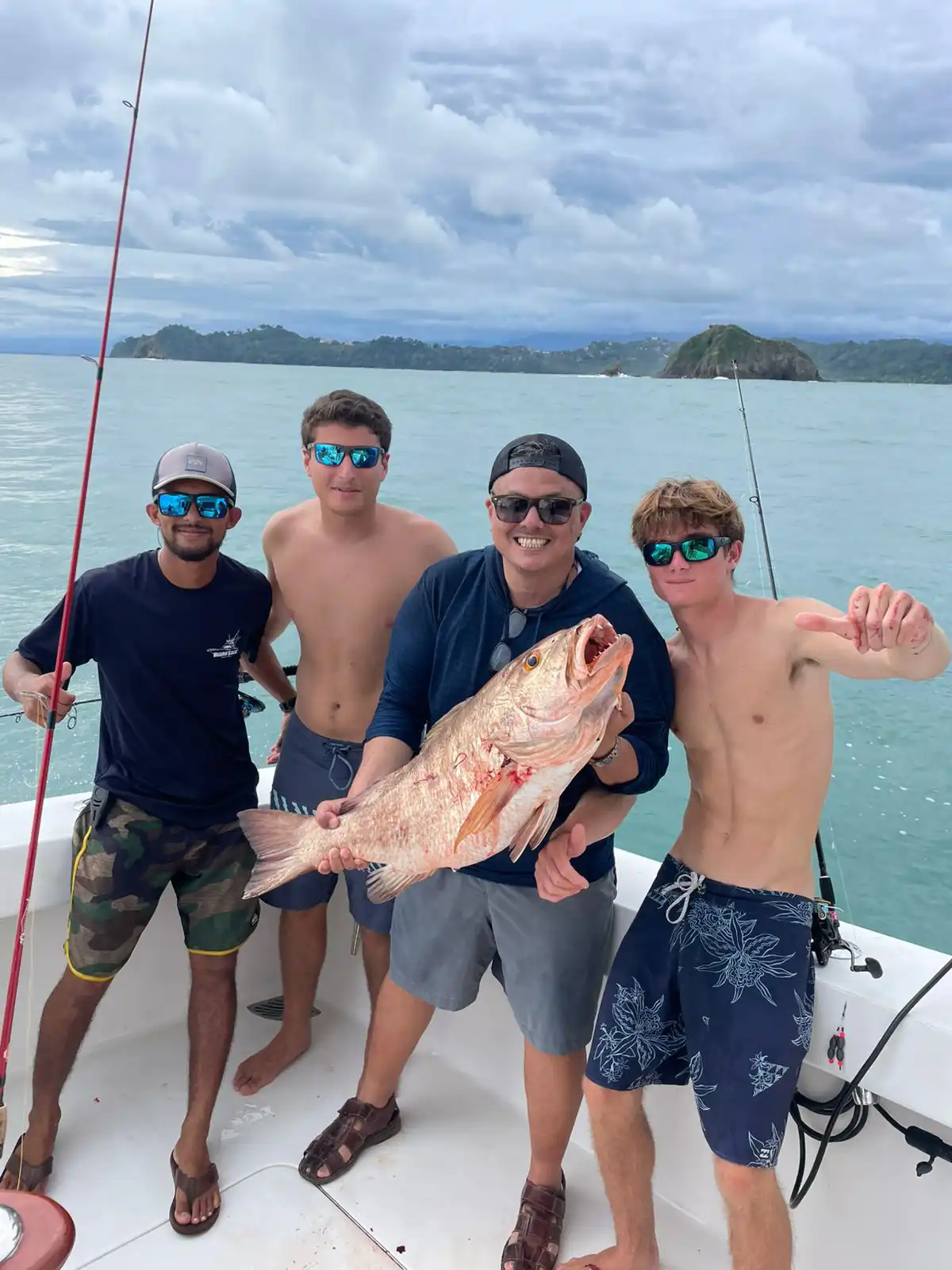
The half day inshore charter is the trip. Four hours, close water, calmer than offshore, and back at the dock with most of the day still ahead of you. It is also the one we point families and mixed groups toward, because a shorter run in flatter water suits people who are not certain how they feel about boats yet.
Not sure which trip suits you? We wrote a straight comparison of inshore versus offshore, and the complete Quepos sportfishing guide covers everything out deep. If you want to see what the boat itself is like, that is on the yacht page.
Everyone fishing in Costa Rica needs a license from INCOPESCA, the national fisheries institute. Ours is handled before you step aboard, and the license page explains how it works.
If you already know you want roosters, tell us your dates through the contact form and we will tell you honestly what that week looks like.
Ready to get out there?
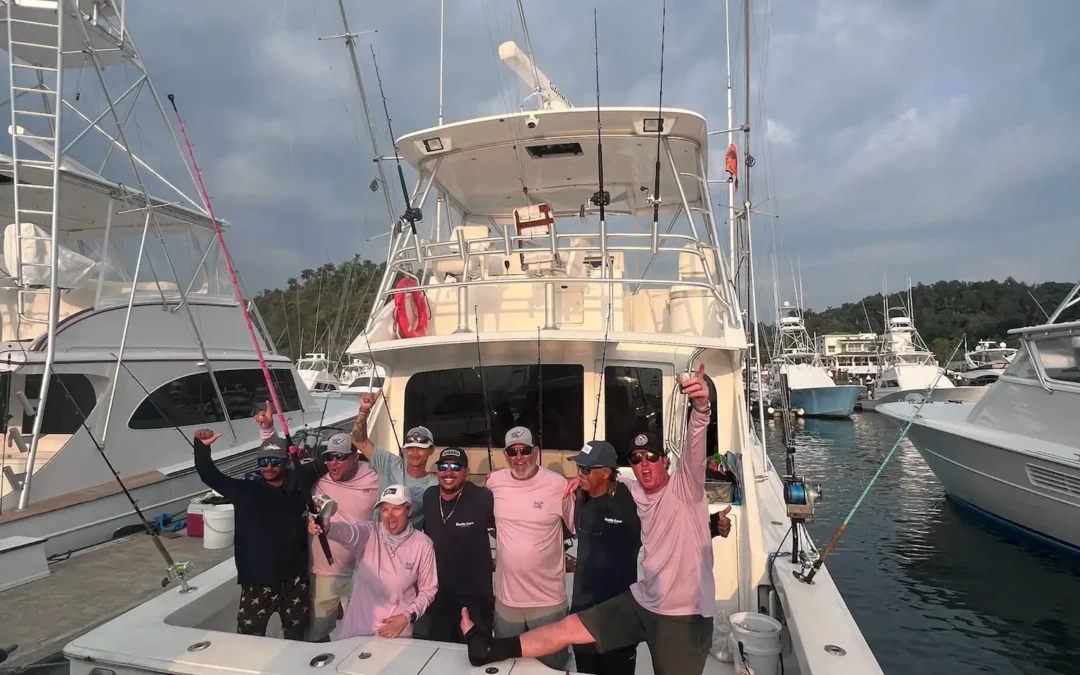
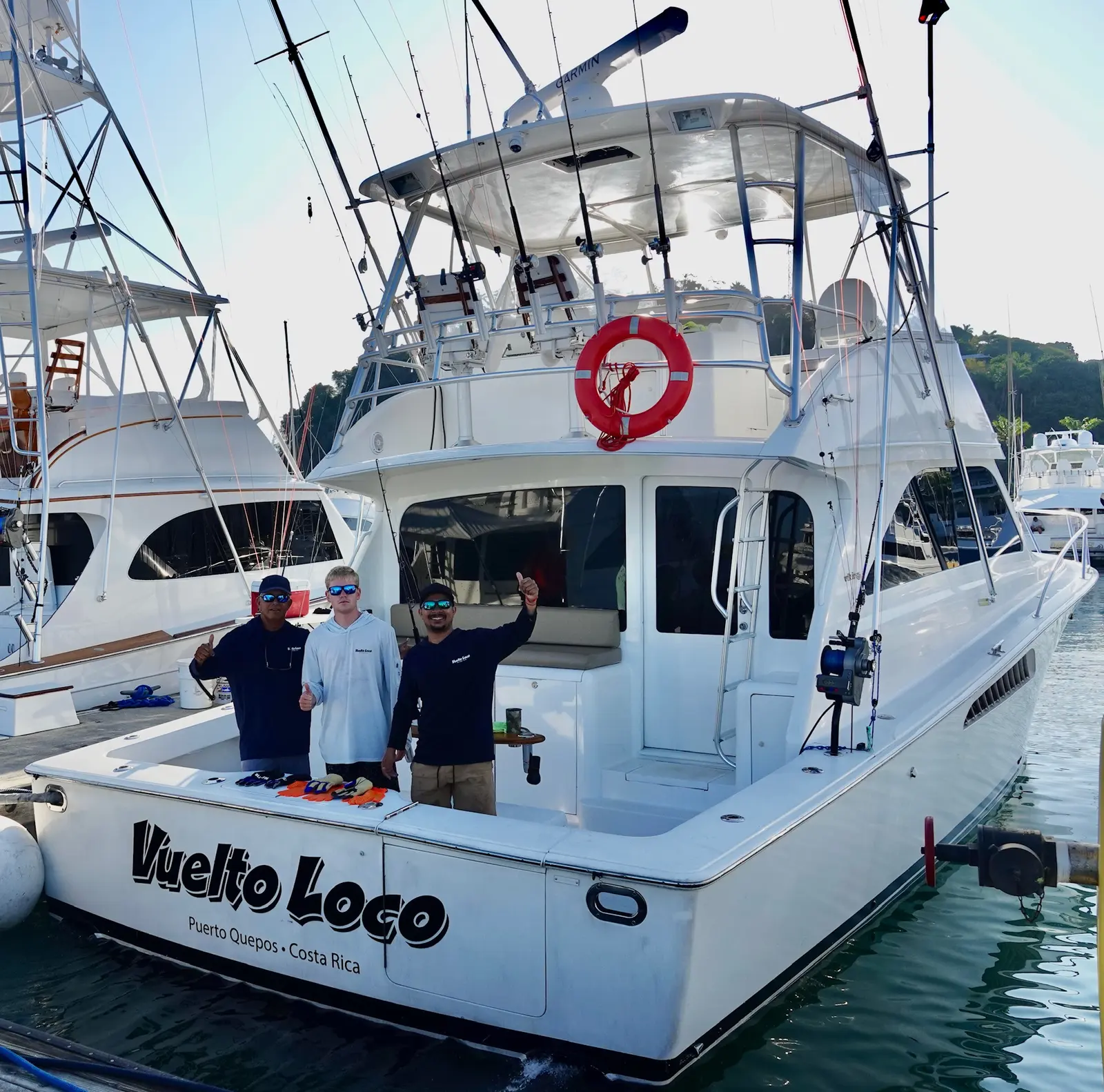
Every charter runs from Marina Pez Vela in Quepos aboard a 45-foot Viking with a local crew. Have a look at what we run, or ask us a question contact.