Everything a first-time Quepos angler needs in one place: why the geography makes this water productive, which species run in which months, how a charter day actually unfolds hour by hour, the full cost picture including license and tax, the catch and release rules, and how to judge a charter operator before you pay one.
Quepos gets called the sportfishing capital of Costa Rica often enough that the phrase has worn smooth. This guide is the long answer to why the title stuck, and to every practical question between reading this and standing on a dock at 6:45am with the sky going orange.
Why this water, specifically
Fisheries are geography before they are anything else. Off most coasts, deep water starts far from land, and a billfish trip spends its first two hours commuting. Off Quepos the continental shelf falls away close to shore, which compresses that commute into a fraction of the day. A full day charter here spends its hours fishing rather than traveling, and a half day inshore reaches productive rock within minutes of clearing the breakwater.
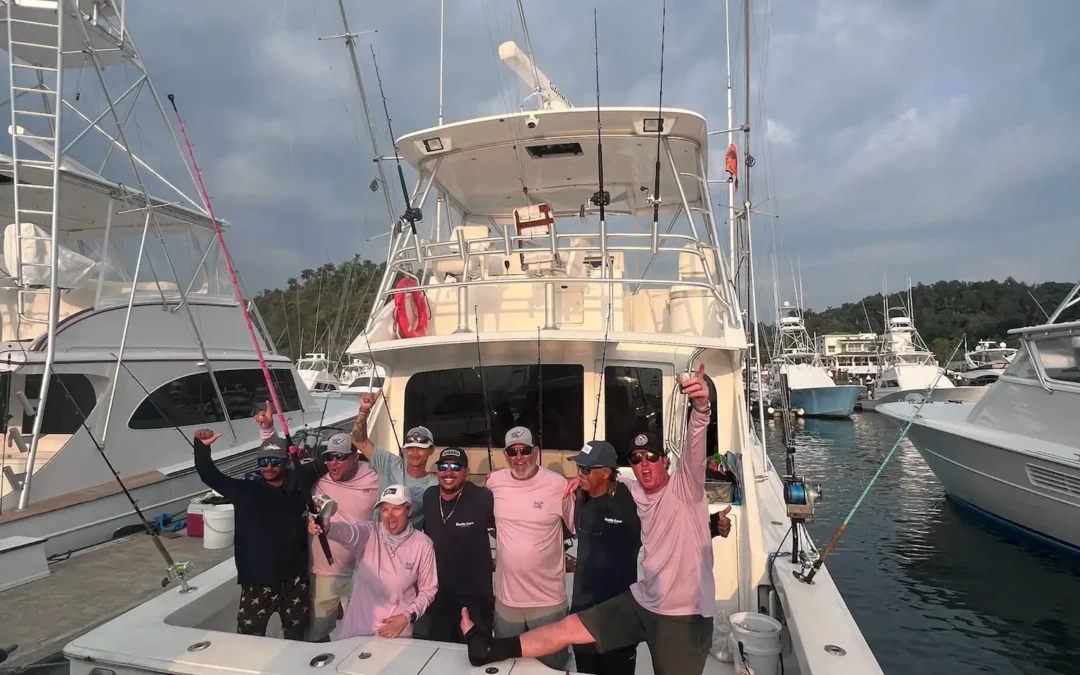
Two more pieces complete the picture. First, the seasons stack: the Pacific here runs two distinct productive windows rather than one, so there is no dead half of the year. Second, Marina Pez Vela gives the fleet a real home: 200-plus slips, fuel, security and provisioning in one place, which is why the Offshore World Championship settles its final here rather than somewhere prettier on a map. Tournament organizers audit fisheries harder than any tourist can; their repeat business is the most honest review Quepos has.
The species, and when
The year splits into two overlapping runs, with the inshore fishery indifferent to both:
| Species | Best months | Also possible | Typical size |
|---|---|---|---|
| Sailfish | December to April | year-round | 80 to 120 lbs |
| Blue and black marlin | November to April | year-round | 200 to 600+ lbs |
| Yellowfin tuna | May to September | year-round | 20 to 200+ lbs |
| Dorado (mahi-mahi) | May to September | October, November | 10 to 40 lbs |
| Wahoo | May to September | November to April | fast and mean at any size |
| Roosterfish | every month | n/a | 15 to 50 lbs |
| Snapper, snook, grouper | every month | n/a | dinner sized |
The pattern to internalize: December through April is the billfish season the region is famous for, and May through September is the dorado and tuna run that green season regulars quietly prefer for its empty water and easier bookings. The month by month calendar breaks this down in detail, and the monthly report says what it looks like right now.
How the fishing is actually done
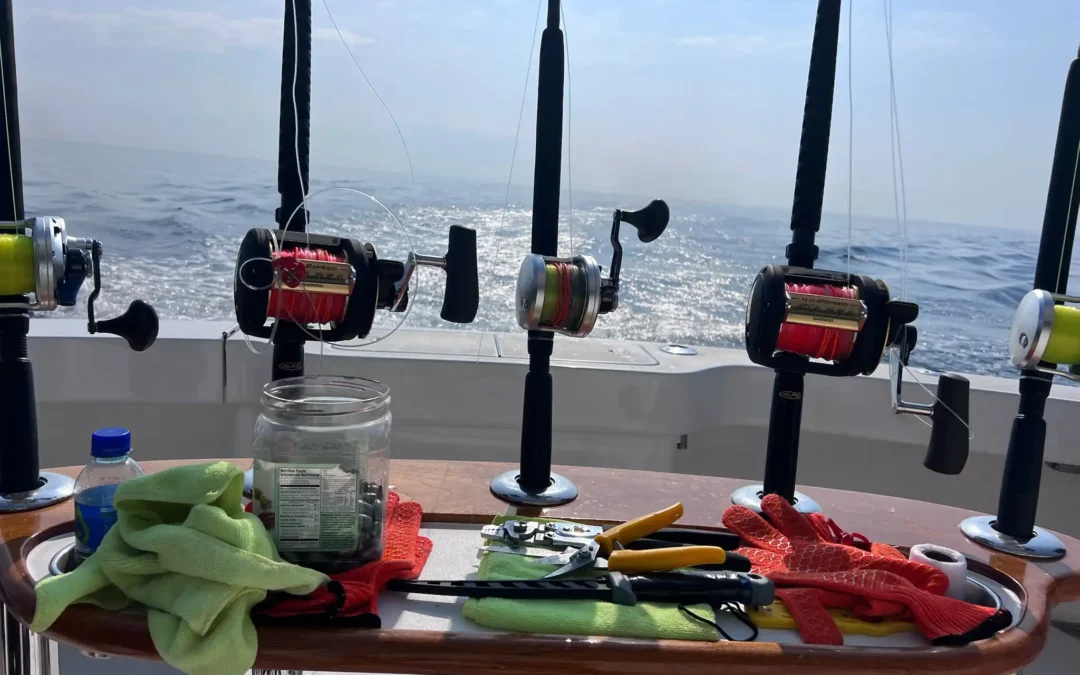
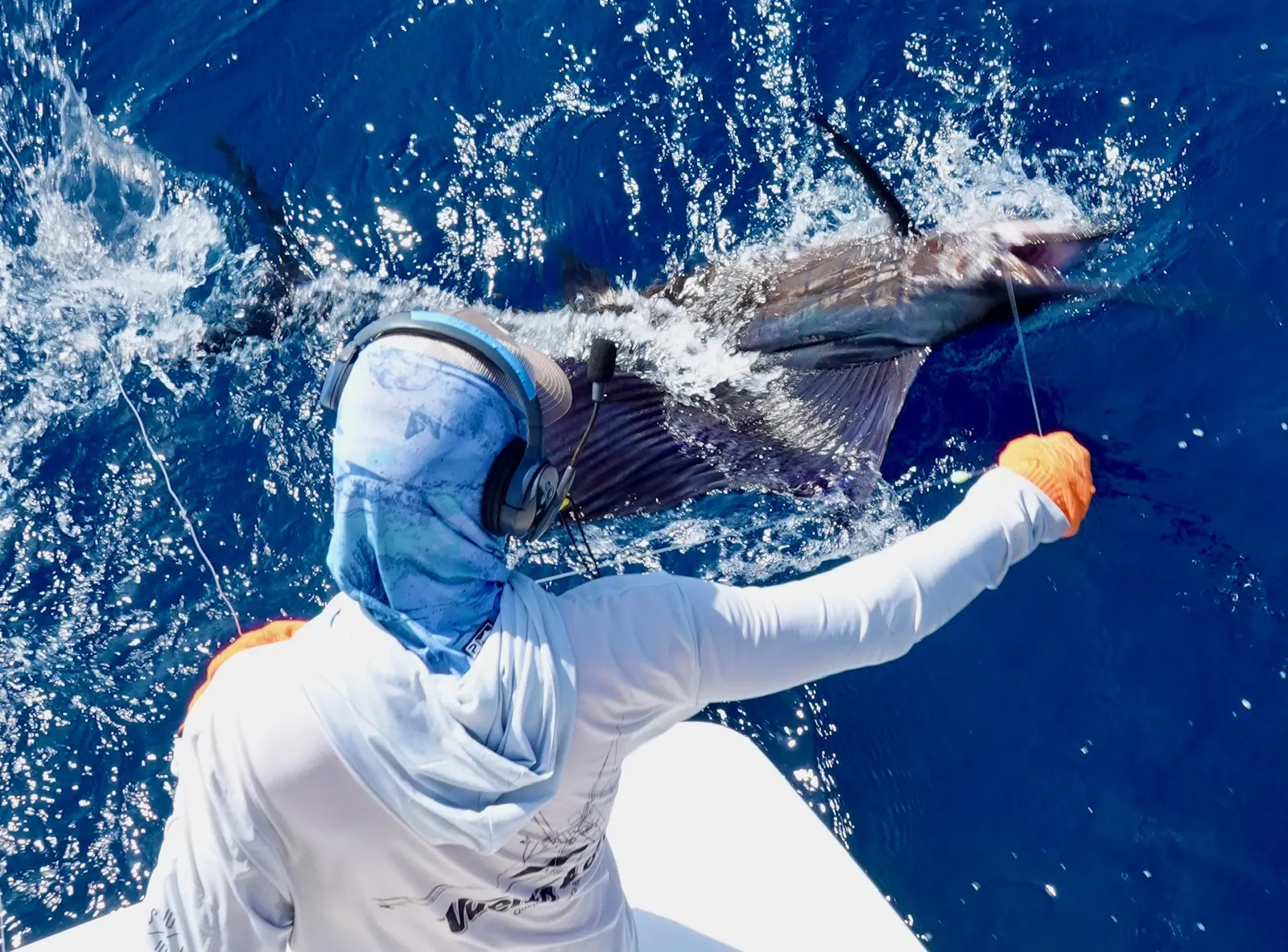
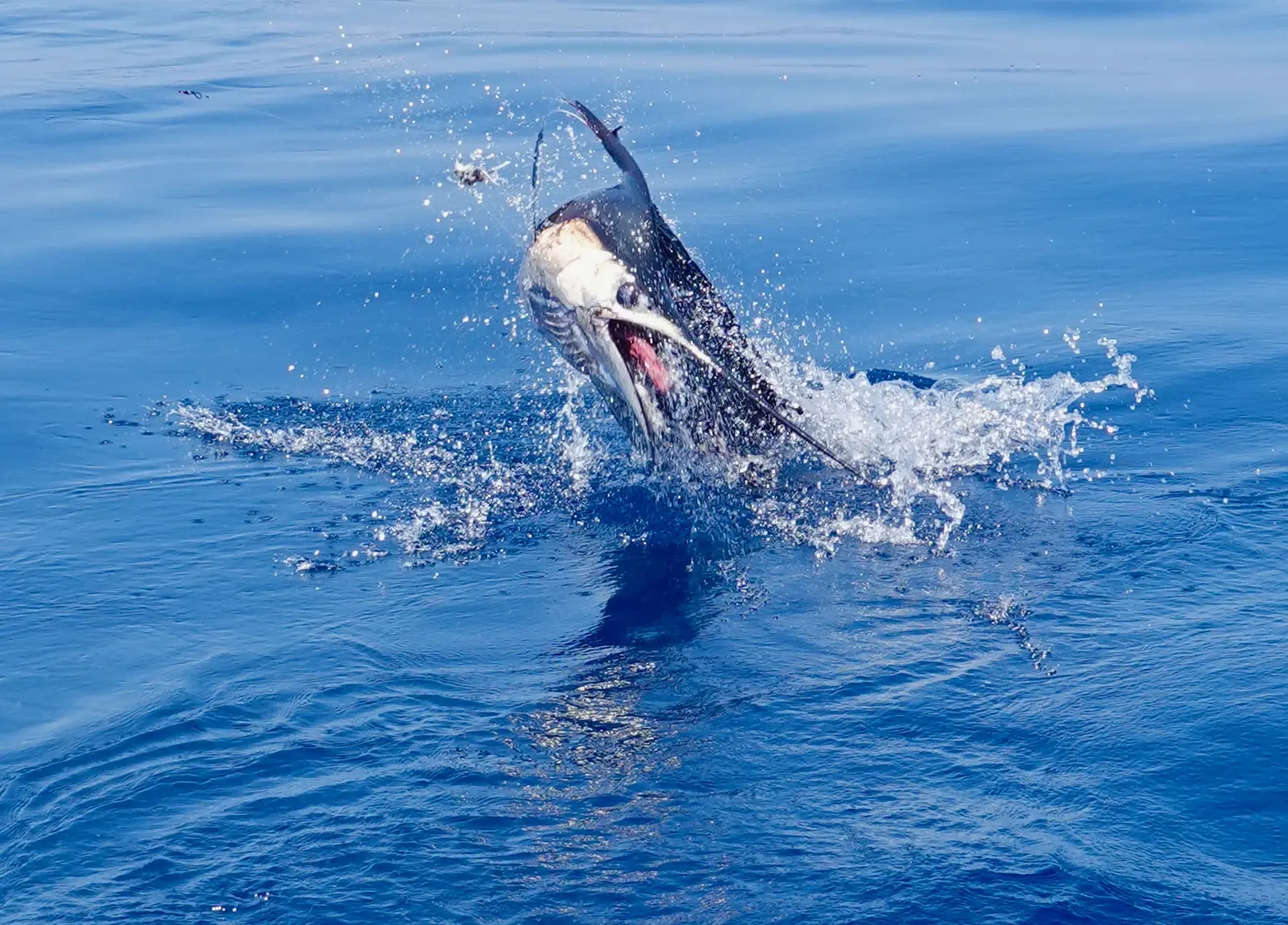
Offshore, the day is built around trolling. The crew sets a spread of lures and rigged baits with teasers running closer to the transom, then works water: current edges, temperature breaks, birds, debris lines. When a sailfish rises to a teaser, the game becomes bait and switch: tease the fish close, feed it the hook bait, let it turn, come tight. Circle hooks are the fleet standard for billfish here because they find the corner of the jaw rather than the gut, which is what makes high-survival release possible. Tuna often announce themselves instead: birds working, bait showering, and then everyone is holding on.
Inshore, it is slower and more surgical. Live bait or lures worked along rock structure between Punta Quepos and Punta Catedral, reading swell and shadow. Roosterfish are the prize and they fight disgracefully, all shoulders and direction changes near structure; the full roosterfish guide covers where they hold and how the crew rig for them. This is also the water where a ten-year-old catches a snapper and talks about it for a decade.
You bring competence or curiosity, either works. The crew supply the rest: gear, rigging, spread management, coaching mid-fight, and the judgment calls about where the fish are that no chart plotter provides.
The rules, plainly
Costa Rica takes its billfish seriously, and the rules are part of why the fishery is still worth flying for:
Sailfish and marlin are catch and release, no exceptions. The fish stays in the water boatside while the crew handles the leader and the photos happen fast. Dorado, tuna and wahoo may be kept for eating, and the crew clean and bag the catch at the dock.
Every angler needs the INCOPESCA sport fishing license: about $17 for eight days, bought online at incopesca.go.cr before you travel or at the marina the morning of. It is the one cost charters cannot include, because it attaches to your passport details. We cover the mechanics here.
What a full day actually feels like
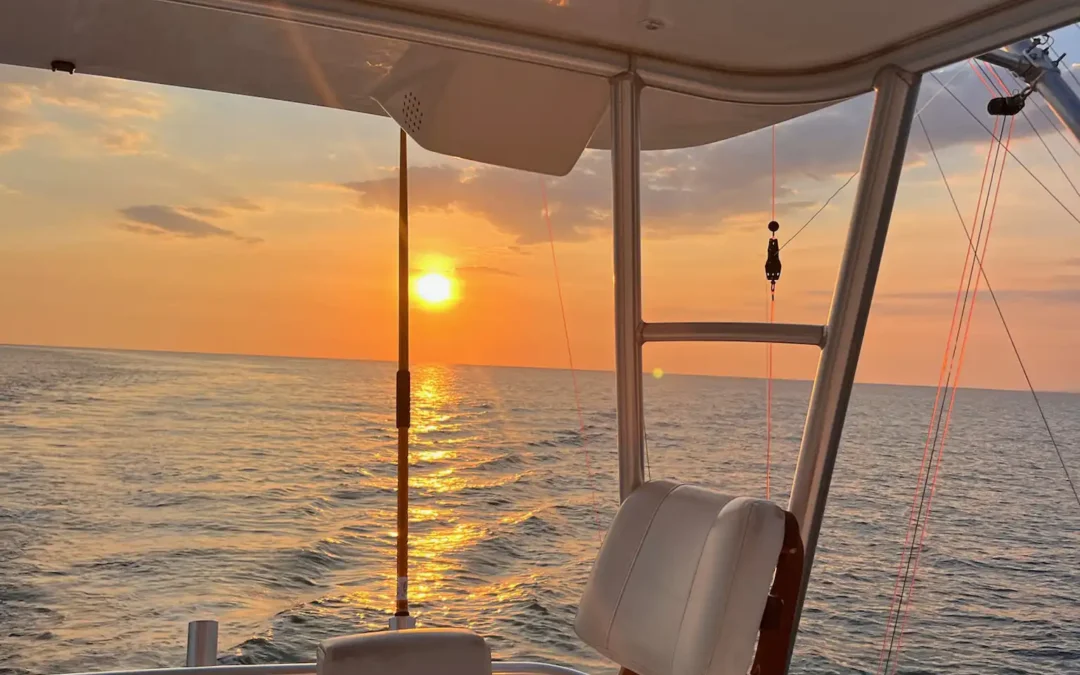
6:15am, leave the Manuel Antonio hill or Quepos town; the road is empty. 6:45am, dock briefing, lines off. The first hour is the run out, coffee, and the sky doing its show. By 8:00am the spread is set and the day settles into trolling's strange rhythm: long calm, then ninety seconds of chaos when a fish rises. Midday, lunch from the galley while the lines keep working; the air-conditioned cabin earns its keep about now. The afternoon repeats the morning with heavier light. 4:00pm, lines up, run home, and the dock arrives with either fillets for dinner or release photos, usually both stories improving already.
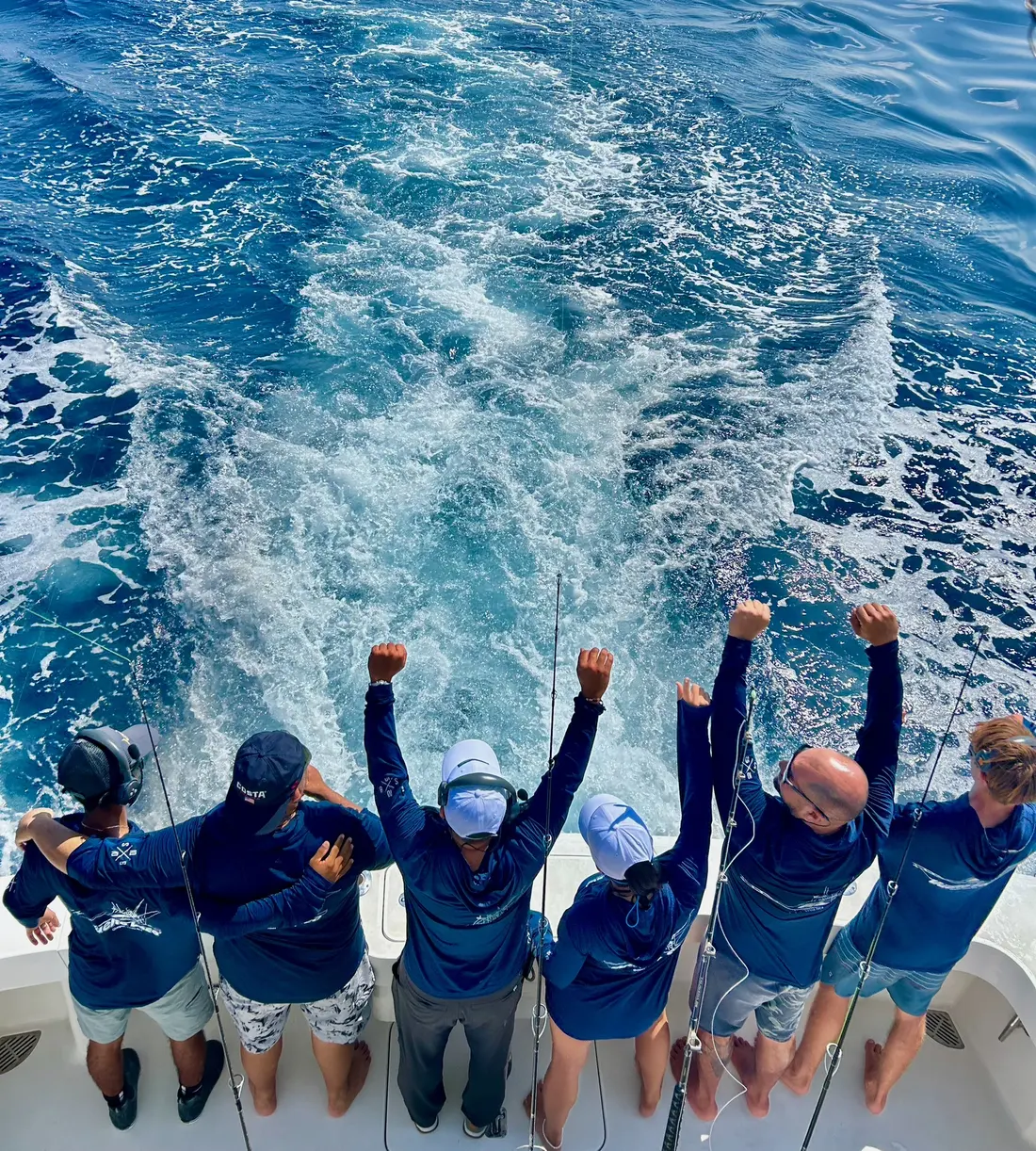
Torn between the two days? The inshore versus offshore comparison settles it honestly. The half day compresses the same shape into four hours close to shore and returns you by early afternoon, which is why it pairs so well with a Manuel Antonio beach stay.
What it costs, all in
Honest math for a private boat, up to six anglers, aboard a 45-foot Viking:
| Half day inshore | Full day offshore | |
|---|---|---|
| Charter | $1,725 | $3,100 |
| Tax | 13% on the charter | 13% on the charter |
| License | ~$17 per angler | ~$17 per angler |
| Included | captain, crew, gear, bait, drinks, lunch | captain, crew, gear, bait, drinks, lunch |
| Crew tip, customary | 10 to 20% | 10 to 20% |
Per angler with six aboard, the full day lands around $600 each before tip, which is worth knowing when comparing against per-seat party boats elsewhere: the private boat premium is smaller than it first appears, and the deck is yours.
Choosing a boat, including not ours
Judge any Quepos charter, us included, on five things. Whether the price is stated with tax handling made explicit. Whether the license is explained rather than hidden. Whether billfish release practice is described without prompting. Whether the boat's size and shade match the group you are bringing. And whether the answer to "what if the weather turns" is a policy or a shrug. Operators that pass those five run good days; the ones that dodge them are why the sixth question exists: whether anyone answers the phone in October.
Ours are on the table: the boat is a 45-foot Viking with air conditioning, a bathroom and twin 800hp engines, every trip is private, the weather call belongs to the captain with reschedule or refund behind it, and the prices above are the prices. The charters page has each trip in full, and the contact form reaches a human who fishes.
Where to go deeper
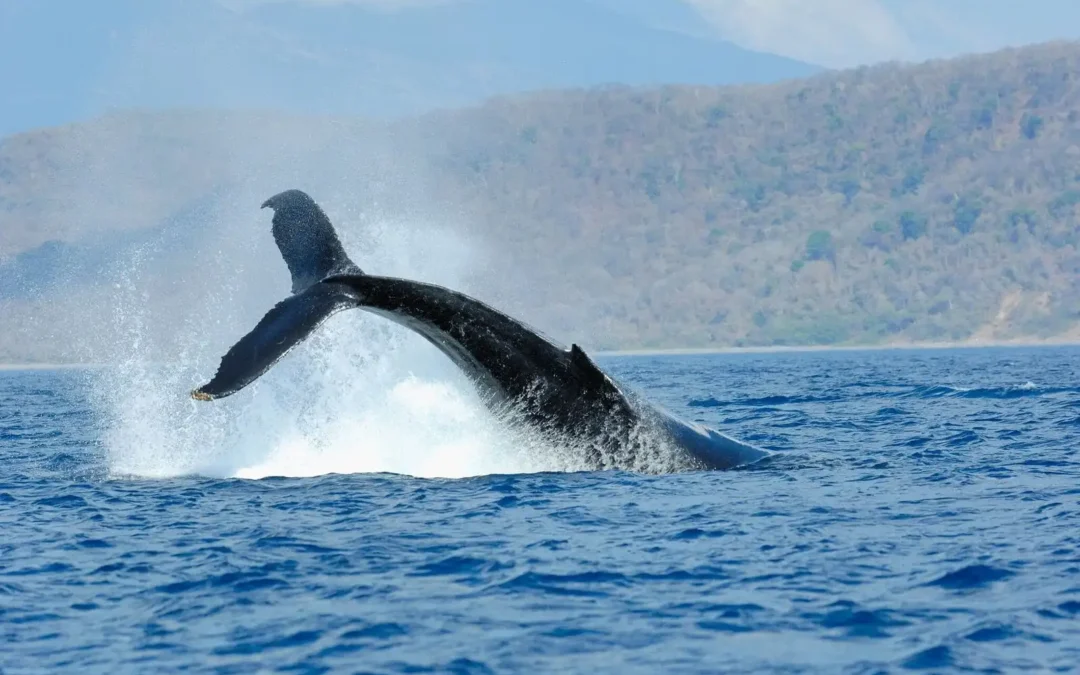
The species rundown profiles each target one by one. The tournament guide covers competition season and what it does to hotel availability. And if whales matter to your group as much as fish, whale season explains the two-migration calendar that makes this coast unusual. Bring curiosity and sunscreen; the water handles the rest.
Ready to get out there?
Every charter runs from Marina Pez Vela in Quepos aboard a 45-foot Viking with a local crew. Have a look at what we run, or ask us a question contact.